Joe Cook Me

  • Taro Root Country Soup (Japan, the Cookbook)

    December 8th, 2022

    My housemates and I were throwing a housewarming party on Saturday night. One of them suggested that we throw a few big pots of soup on the stove the satisfy the hungry. After protesting that we could do better -(maybe some fried food? everybody loves croquettes!) – I took up the task of handling our vegan and gluten free option. I was up for the challenge of cooking for dietary constraints, but also aware that this would clear me to cook the meat at the next party.

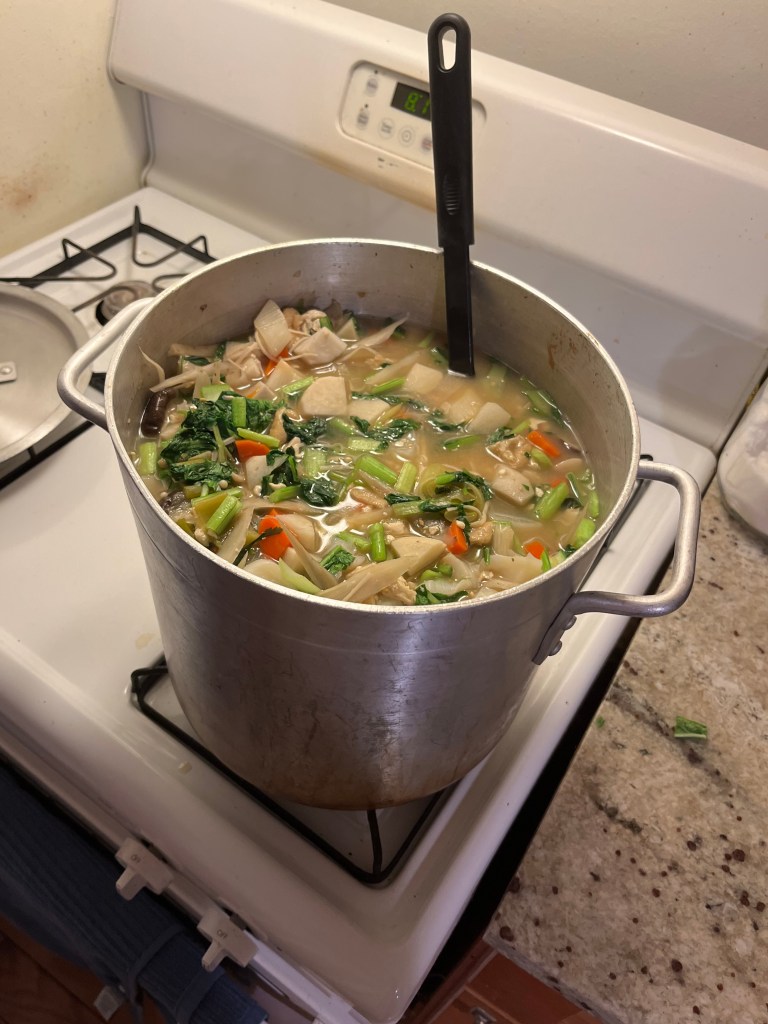
    What to cook. My housemate suggested lentils? But I want to surprise, and lentils would be a typical American vegan/gf option. I drifted towards my Asian cookbooks. In retrospect, I think I could have done something really good with coconut milk from southeast Asia, but I ended up in Japan. I saw a bunch of soups and simmered-vegetable recipes that featured many obscure ingredients that I could find from a specialty store, thus giving our guests a unique experience. I selected one that highlight taro roots and had no offending katsuobushi. Be careful though: usuage (deep-fried tofu pouches available frozen in Asian markets may have gluten in them if they are pre-seasoned.). A triple-batch was necessary for a 50-person party. The recipe includes: taro roots, naga imo, carrot, daikon, burdock, konnyaku, usuage, momendofu, shiitake, shimeji, enoki, negi, komatsuna, and seri in a broth of inaka miso and konbu. Of these, the komatsuna (Japanese mustard greens) and the seri (*wild* and not conventional Japanese parsley) were the most difficult to find and required going to a Japanese market.

    Looking to impress, I made sure to get very high-quality and thick konbu. The resulting broth was delicious and umami-packed. After boiling the vegetables in the broth, it became even more delicious. That being said, the preponderance of potatoey taro root in the soup was a bit fatiguing. I’d recommend cutting the taro, actually, and/or upping the amount of broth. Overall, guests complimented the soup, particularly those with dietary constrains, but the accompanying spicy chicken-tortilla soup that my housemate whipped up was about twice as popular (perhaps more as we ran out by midnight). I don’t believe that the increased popularity of the chicken-tortilla soup was due to its having meat. It was more tasty. Had I selected a better recipe, I believe the guests would have eaten all of it. My soup did have a novelty factor; guests got to try a bunch of new produce!

    Joe’s Rating: 6
    Difficulty: 5
  • South African “Natal Red Kidney Bean Curry” and Pakistani “Green Cabbage Sabzi” (Ultimate Curry Bible)

    December 5th, 2022

    Coming back from the Thanksgiving holiday, I felt I had gained a few pounds from excessive turkey and pecan pie consumption, as usual. It was time to spend a couple of weeks making legume curries. A red-bean curry from South Africa sounds healthy and interesting – why not! Throw on some Pakistani cabbage for a veg on the side.

    Extant notes on this dish are minimal: the bean main was good, not too spicy. Be sure to pour off most excess water from the beans. The cabbage dish was more challenging – I think it requires cooking in 1/2-sized batches over a weak stove to get the correct effect of evaporating the liquid while not overcooking the cabbage. I doubled my recipe, so by the time the liquid was cooked off, the dish was pretty mushy. Try leaving some bite next time.

    Joe’s Rating: 6/5 (Beans/Cabbage)
    Difficulty: 6/5

  • Chickpea Stew with Lamb & Tomatoes (Istanbul & Beyond)

    November 29th, 2022

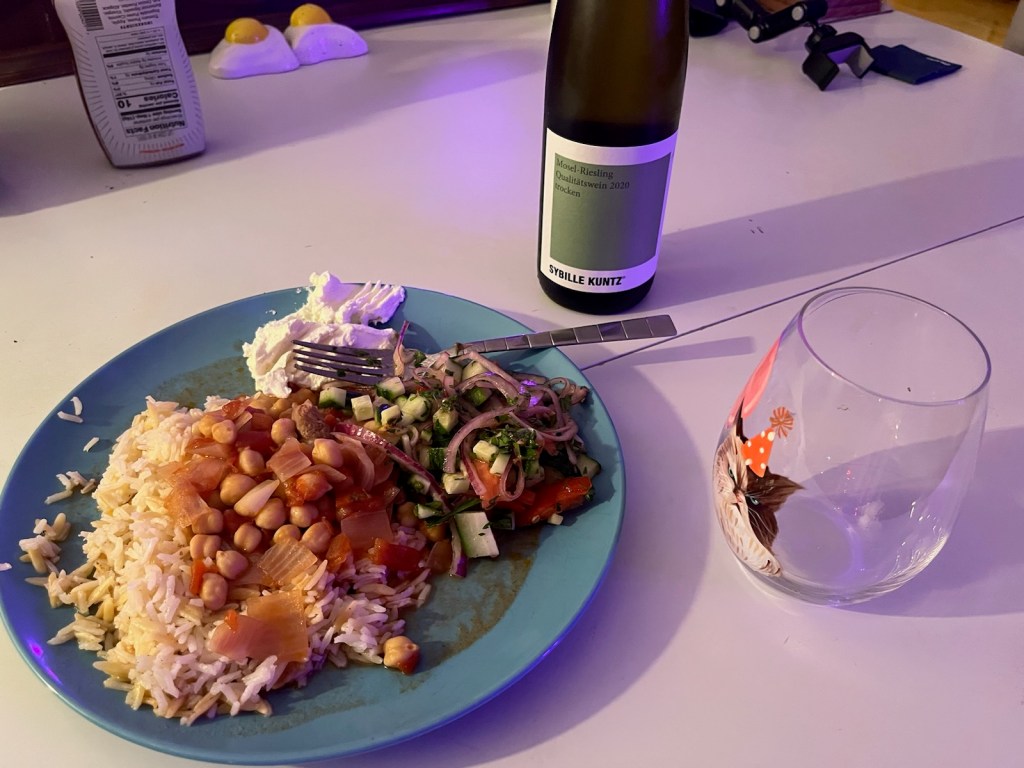
    Here’s another tasty-healthy lamb-yogurt stew from I&B. Note that I’ve already made the Turmeric-Scented Lamb & Chickpea Stew as well as Creamy Yogurt & Lamb Stew with Grains, which were both pleasant (see those posts, coming soon). My housemate, Meryll, was around, so I made some for her too.

    Overall, the dish was good, but I liked it less than the other two lamb stews (particularly the grain one) in I&B. I’d recommend cooking the stew longer than it says. For a double batch, use only about 7 cups of hot water total, then boil for 2-2.5 hours, uncovered if needed.

    Served with Rice and Orzo Pilaf, Strained Yogurt, and onion, cucumber, tomato salad. I highly recommend these accompaniments to elevate the dish! Served with a qualitätswein (earlier harvest / less ripe / usually cheaper) riesling from Sybille Kuntz. This was a fine pairing, but could have been better. I didn’t take notes on it, but I’m guessing this didn’t have the fat/heat to call for a riesling. Maybe a light red or rosé a bit earthy and acidic could compliment the gaminess of the lamb, freshness of the salad and earthiness of the chickpeas?

    Joe’s Rating: 6.5
    Difficulty: 5.5

  • Rabbit Confit Dinner Party (Lost Kitchen)

    November 20th, 2022

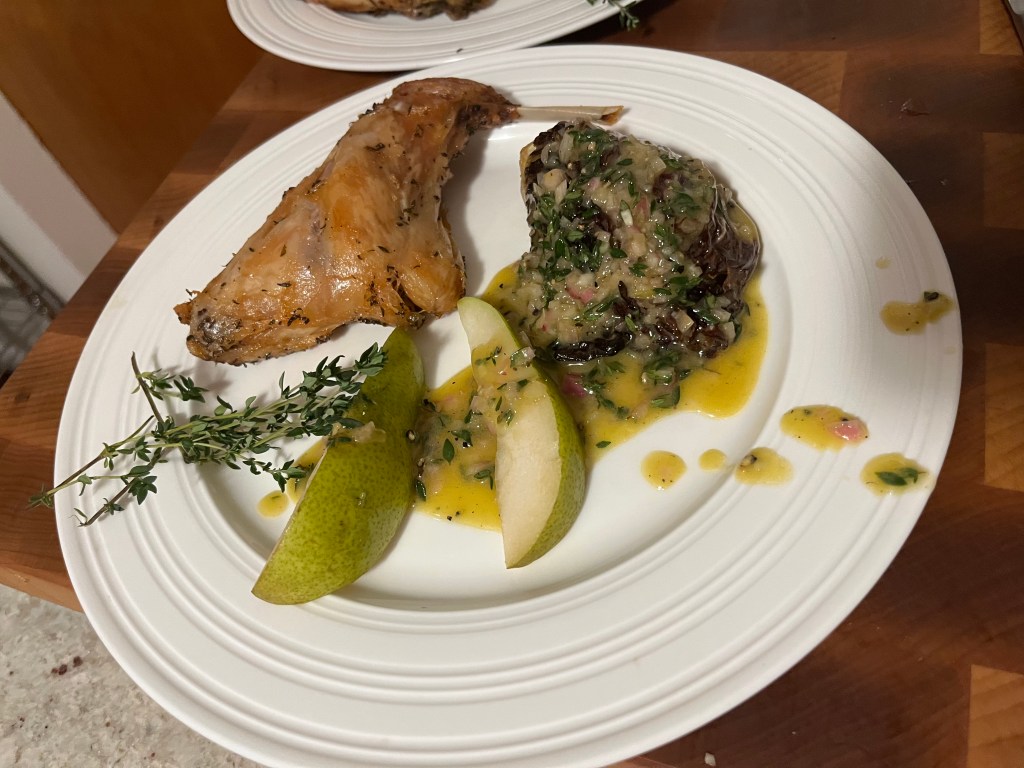
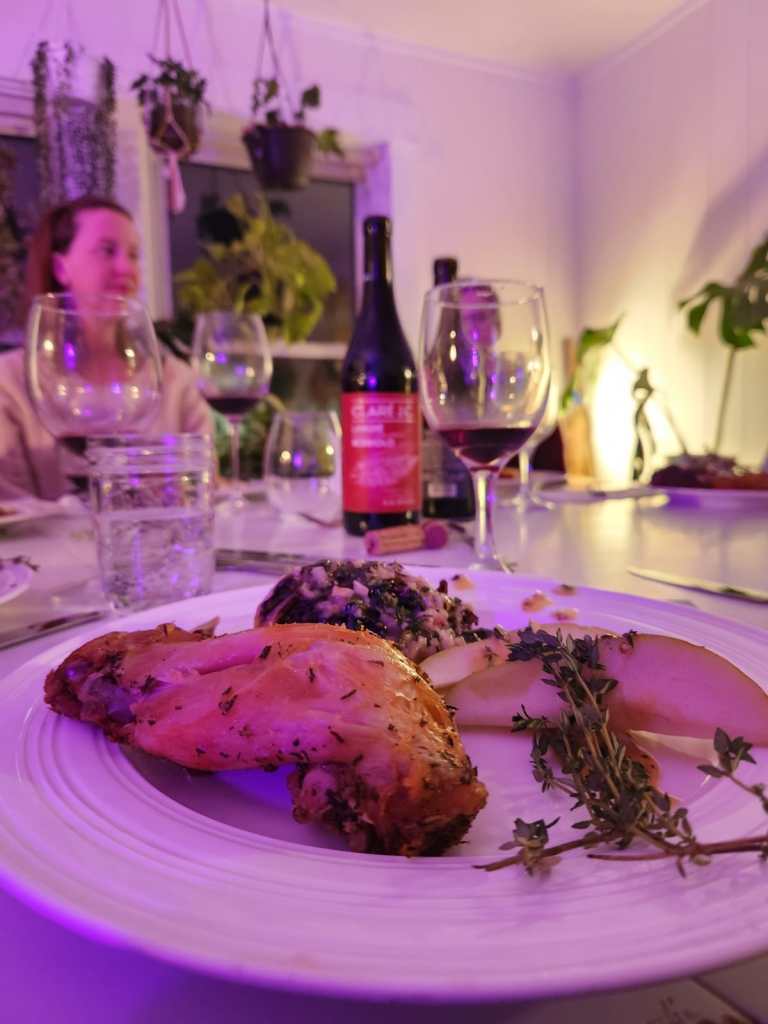
    Having recently moved to Cambridge, I wanted to host a dinner party that was both delicious and did not demand too much in the ways of equipment, time, or specialty ingredients. I turned to Lost Kitchen, which has generally been a safe bet to easily impress with a 3-course meal. After Plenty, this is the cookbook I am most likely to cook every single recipe in due to its consistency and ease. I selected “Fried Rabbit with Charred Radicchio & Mustard Vinaigrette,” one of the two remaining main courses for autumn (the other being a moose stew… let me know if you have a source for this!) For an accompanying appetizer and dessert, I selected “Roasted Buttercup Squash Cups with Apple Slaw” and “Rustic Plum & Honey Pie with Vanilla Bean Soured Cream,” substituting pear for the plums.

    Roasted Buttercup Squash Cups with Apple Slaw
    Butternut squash worked fine as a substitute for the buttercup, although this dish could use more concentrated flavor. Perhaps the buttercup would accomplish this. I recommend cutting the squash “cups” into sixths instead of quarters if serving as an appetizers. Can be prepared vegan/gf to-order if you substitute oil for the butter when you roast an individual portion. The apple slaw is essential and yummy here, although I don’t have any further notes on it. Sadly, I forgot to take a photo of both the appetizer and the dessert. Paired OK with Icaro Nemico Bianco Vulcanico, a white Italian Malvasia.

    Fried Rabbit with Charred Radicchio & Mustard Vinaigrette
    This rabbit-leg preparation is a true confit in duck fat (I got a 10-pound tub of it from D’Artagnan, which is a bit more than a gallon) that is then finished by deep frying. The dish is overall excellent, but you need to be very very careful not to over-fry the legs. The recommended time of 3-4 minutes is should be more like 1-3 minutes (Erin French must have designed this recipe with meatier rabbits.) Just fry them hot and fast to get the outside crisp. Given the shorter fry time, I’d recommend starting with the inside still warm. Also note that people confit rabbit at temperatures much lower than the recommended 250F (I saw as low as 210F online) and not necessarily for longer. I would try the lower temperature as an experiment in the future.

    Overall, the dish was a hit (despite the rabbit being dry). The accompaniments were lovely. I paired this with two wines: a fruity red-Rhône blend from Ventoux and a more foresty nebbiolo from Langhe. The latter definitely worked better with this dish.

    Rustic Plum Pear & Honey Pie with Vanilla Bean Soured Cream
    The dessert was the highlight of the meal (as with many Lost-Kitchen dinners I’ve prepared). Two months later, people still bring up this pie as an example of how underrated and amazing pear can be in a dessert! I made two of them and we almost finished both. Erin French’s disclaimer “I’m not one to fuss over pie crust; I lack the patience” was truly unnecessary. The crust turned out very impressive. I love how easy the crust is because it comes out very flakey and visually striking on the other side. I will definitely be using this simple and quick technique in the future. Served to much delight with a Sauternes.

    Joe’s Rating: 6/6.5/8 (Squash/Rabbit/Pear)
    Difficulty: 5/7.5/5

  • Beijing Vinegar Peanuts and Stir-Fried Sweet Peas (The Mission Chinese Cookbook)

    July 9th, 2020

    Again, no picture to document this one. Notes for peanuts: try to drain the pickles and limit the amount of vinegar. Notes for peas: Use less chicken stock. Get the pan really really really hot (or reduce in advance) – difficult to get al dente.

    Joe’s Ratings: 6/6

    Difficulty Rating: 5/6

  • Fried Pig Tails with Smoked-Cola BBQ Sauce (The Mission Chinese Cookbook)

    July 8th, 2020

    Notes: Really liked the dish, BBQ sauce, and the braising liquid (I used all dark soy sauce.) Tails are fun snacks. I would either do this as an app or choose a less bony cut to make a main course. Don’t forget to salt at the end.

    Joe’s Rating: 6

    Difficulty Rating: 7

  • Kung Pao Pastrami (The Mission Chinese Cookbook)

    July 5th, 2020

    A bit on the salty side. Be careful to keep the pastrami as moist as possible. A double batch was no problem. Some extra mild peppers were good too.

    Joe’s Rating: 7

    Difficulty Rating: 6

  • Pastrami (The Mission Chinese Cookbook)

    July 3rd, 2020

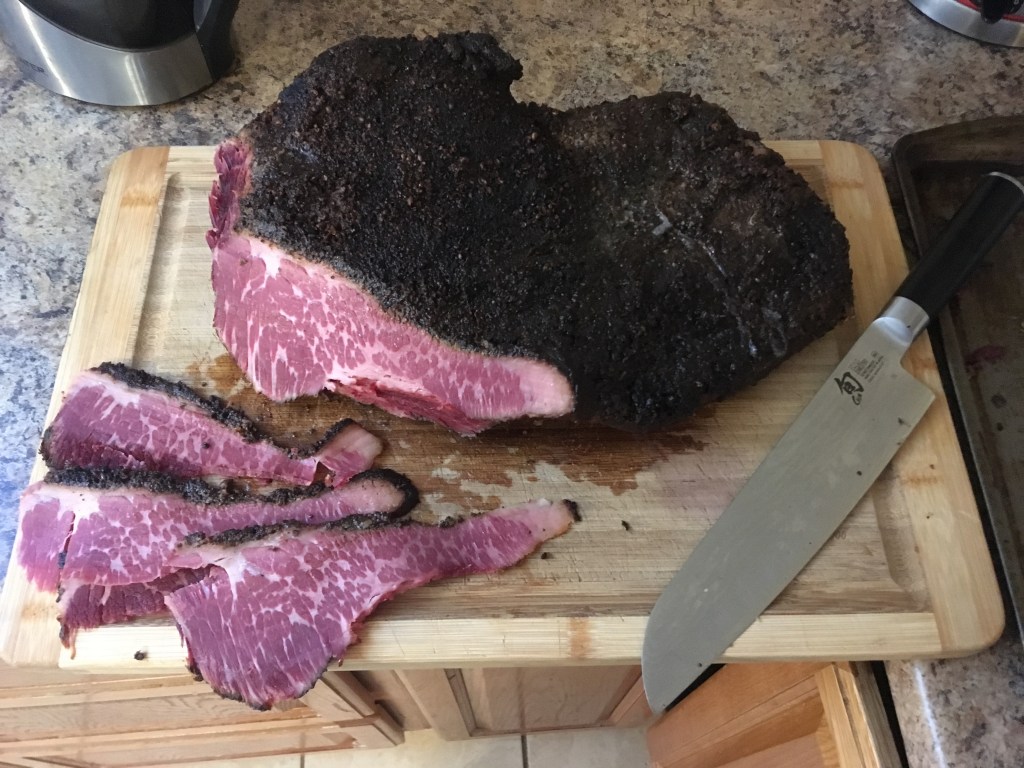
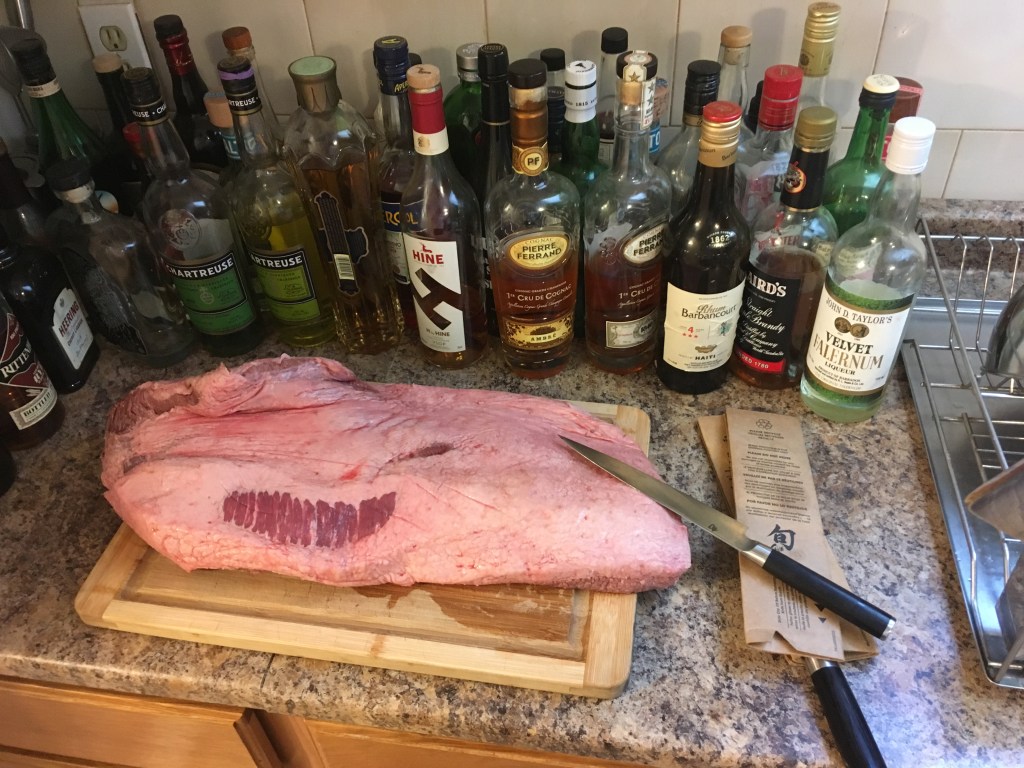
    Worth the time investment! I cured my own corned brisket. It took 9 days for a full brisket and just barely reached the center. I also had to hang out outside at a friends house for 12 hours while this smoked at 215F. Then, when it hit 165F-170F, I finished it using a traditional Jewish technique of sealing in foil and steaming in the oven until it hit the appropriate temperature (I forgot to note this, but you should look it up if you attempt the recipe.) This was delicious on its own, and in Kung Pao Pastrami!

    Notes: Don’t be shy with the Sichuan Peppercorn in the brine or the pepper rub. It came out salty – consider using 3/4 of the salt in the rub next time, assuming you do the same 9-day salt cure. Get extra mustard for serving. Take care that the rub does not slough off. Do 1:1 ration of black to Sichuan peppercorns. I also smoked Coca Cola and drippings to make the BBQ sauce for the pig tails.

    Joe’s Rating: 6.5

    Difficulty Rating: 9.5

    Note how much the brisket contracted after it was smoked – these are the very first slices of the pastrami.

  • All Under Heaven – Cod with Crispy Black Bean Sauce (Yunnan), Peanut Milk, Water Chestnut Pastries (Hunan), Raw Chinese Yam in Syrup (Guizhou)

    June 7th, 2020

    The raw Chinese yam felt more like a palette cleanser…

    The water chestnut pastries need some research / work, otherwise not worth making. Note that the food-processor and cheesecloth method is necessary here – blenders will not cut it. Don’t overcook the dates to minimize the liquid – the paste should be pretty solid.

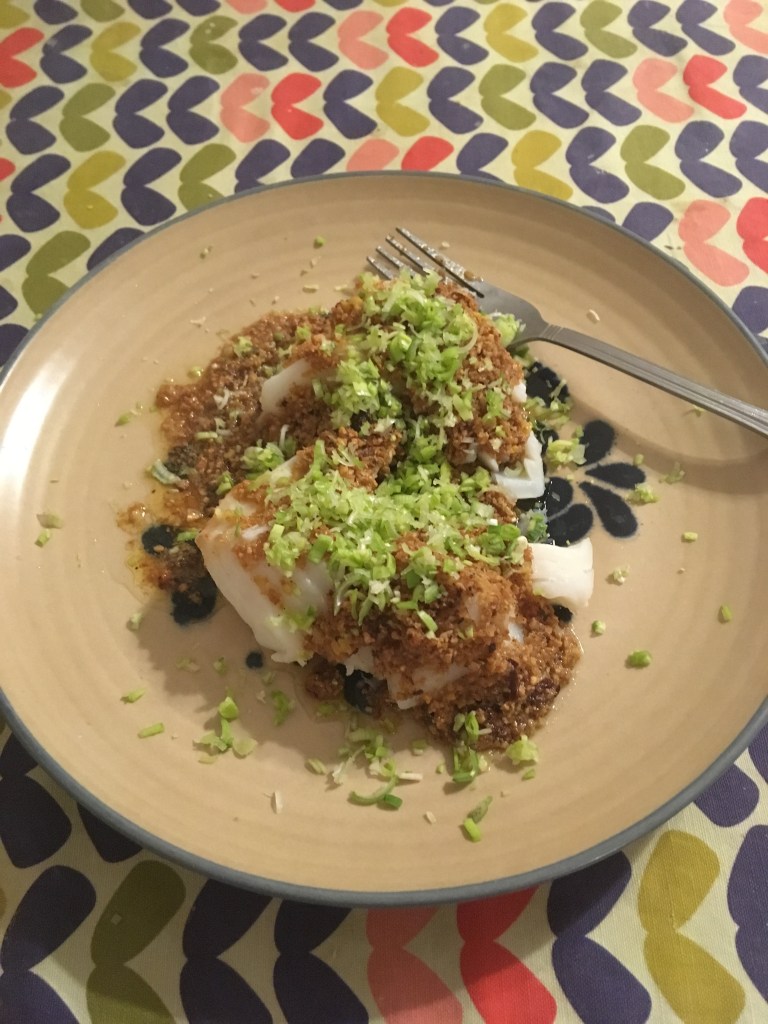
    The cod is good and easy. Acid is noticeably absent – I added some lemon. I took it too high of internal temperature by accident, but the cod seems pretty forgiving. I used the “masters” brand pre-made sauce, as suggested.

    The peanut milk was much thicker than expected, and not overly sweet or starchy. Has some fresh flavors too it. Nice! (In retrospect, I’m guessing that this was not made with actual raw “green” peanuts, as I’ve only been able to special order those in making certain American Southern dishes more recently. I’ll have to try again with green peanuts and compare / also research this beverage.)

    Joe’s Ratings: 5.5/4.5/4.5/4 (Cod/peanut/pastries/yam)

    Difficulty Ratings: 1.5/4.5/6/0

  • All Under Heaven – Lemongrass Chicken (Yunnan), Shredded Pork and Tuber Soup (Sichuan), Mustard Cabbage Schmaltz (Hunan)

    June 2nd, 2020

    Yunnan, Sichuan, and Hunan are all provinces from the central highlands of China. (You may have heard of Yunnan as the province with the famous pu-erh mountains). Make sure you baste the chicken a lot, especially if it is on the larger side. The soup was excellent! Try adding a touch of sichuan pepper. The pickled tuber is sometimes available in plastic packaging on the shelves, but also sometimes self-serve from plastic boxes/buckets on the floor of the produce section of Asian markets.

    Joe’s Ratings: 5.5/6.5/4.5 for Chicken/Soup/Cabbage

    Difficulty Ratings: 5/4/2

←Previous Page
1 … 3 4 5 6
Next Page→

Blog at WordPress.com.


Loading Comments...
 

    • Subscribe Subscribed
      • Joe Cook Me
      • Already have a WordPress.com account? Log in now.
      • Joe Cook Me
      • Subscribe Subscribed
      • Sign up
      • Log in
      • Report this content
      • View site in Reader
      • Manage subscriptions
      • Collapse this bar