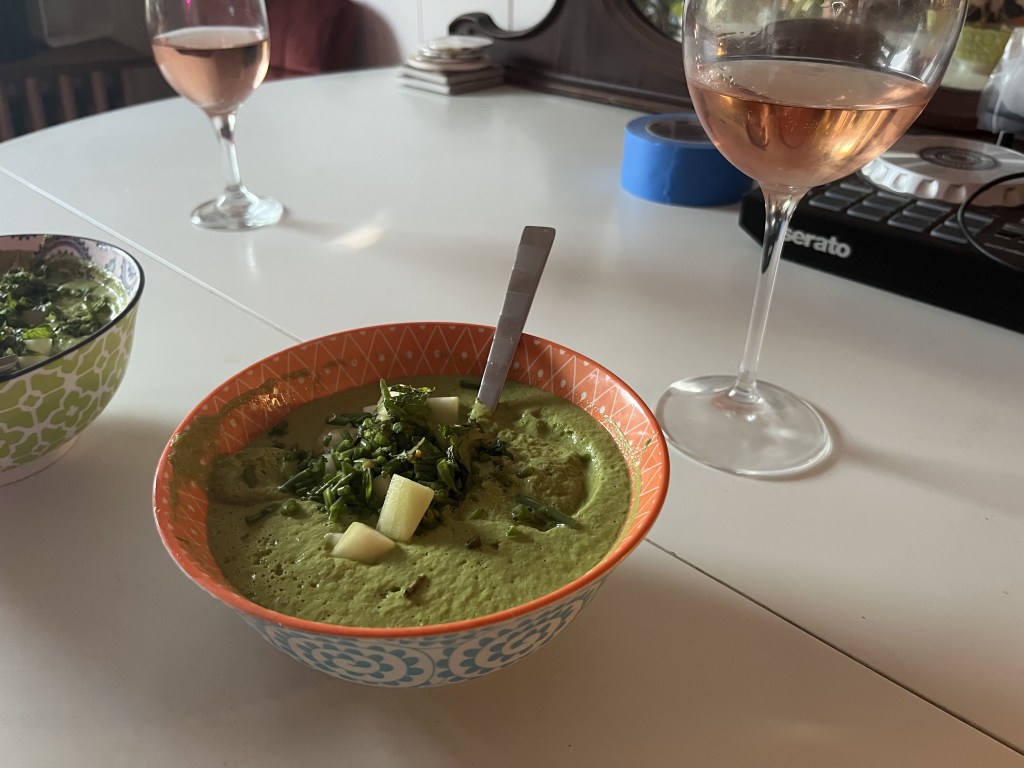
Tonight is vegan-food night! An appetizer of chilled bright-green cucumber-tahini soup and a main of roasted mushroom skewers seemed both seasonal and sufficiently rich to pamper my vegan friend.
Chilled Cucumber and Tahini Soup with Spicy Pumpkin Seeds (Falestin): The preparation of this dish is straightforward. Just make sure not to forget any of the many garnishes in the soup! I found this dish to be refreshing, but surprisingly light and simple flavored given the addition of tahini. Joe’s Rating: 6 Difficulty: 5.5
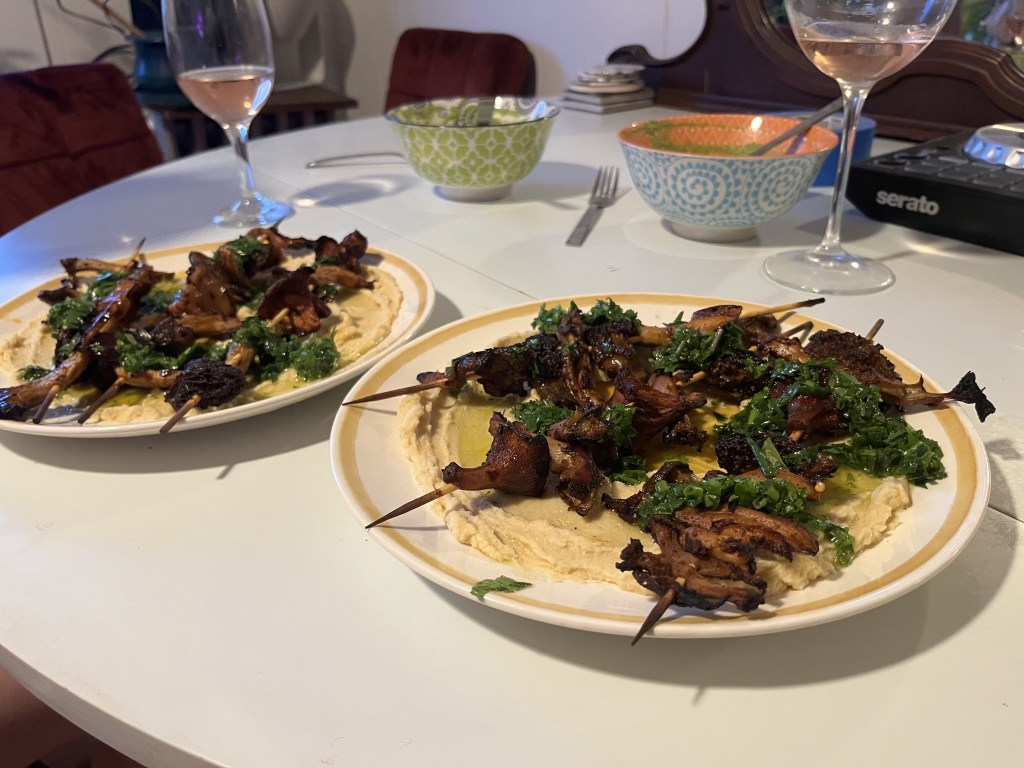
Crispy Oyster Mixed Mushroom Skewers with Crushed Chickpeas(Mezcla): This dish really exceeded my expectations. First of all, I decided to use dried instead of canned chickpeas. I just followed the instructions for preparing them in the hummus recipe in Zahav. I believe it’s totally worth it if you are able to soak the chickpeas overnight and boil them for 60-90 minutes. The second adaption I made was to get a mix of seasonal / wild mushrooms from The Mushroom Shop in Somerville. After talking with the experts there, we decided on a mix of oysters, chanterelles, and morels. Finally, I’d recommend making significantly extra chili oil for basting and garnishing the mushrooms.
We absolutely loved this dish; all elements were important. The morels were our favorite mushroom, although all were very good. We noted that meat-eaters would not miss their meat in this dish. Joe’s Rating: 8 Difficulty: 4.5
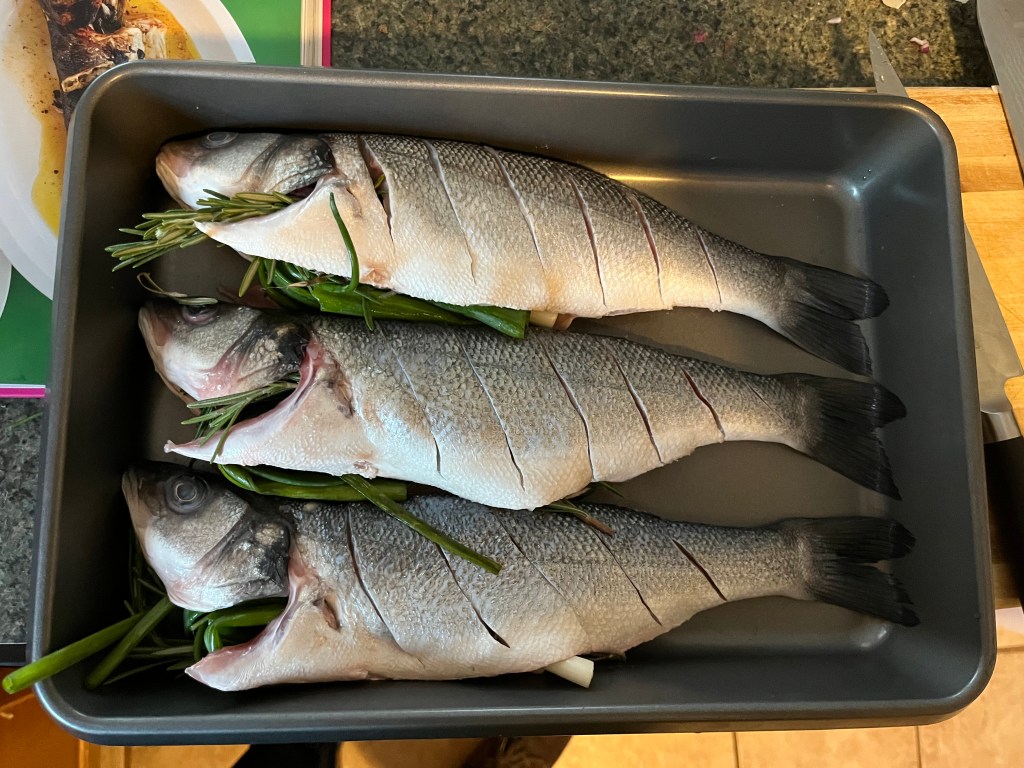
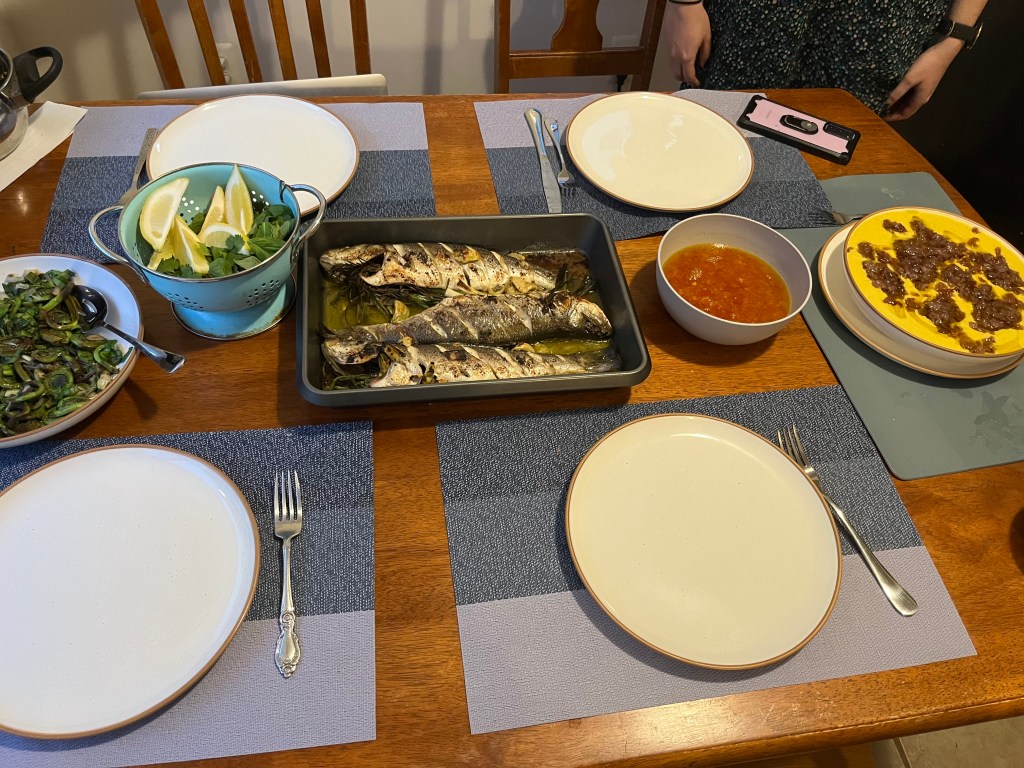
Brown Butter Sea Bass with Tangerine Dipping Sauce and Lots of Herbs I got three branzinos from Whole Foods to roast for this dish. The idea was to roast the fish basted in a browed citrus butter, then to sever the fish in family style where guests can grab chunks of fish and wrap them up in a piece of lettuce like a taco. Some herbs and a refreshing citrus dipping sauce are served to go with the fish filling. People liked this more than I thought they would; the lettuce wrapper was less fussy than I expected. Joe’s Rating: 6.5 Difficulty: 4.5
Cheesy Polenta with Curried Onions This was an attractive starch to pair with the fish and spring vegetables. The resulting dish was very rich and delicious; the combination of Gruyere and miso worked really well; however, I believe it would be better suited to a cold-weather dinner. The only cooking note I have is to make sure you follow the instructions on your polenta to get the right consistency, rather than the ones in the cookbook (which I found was way too runny for my polenta.) Joe’s Rating: 7 Difficulty: 4.5
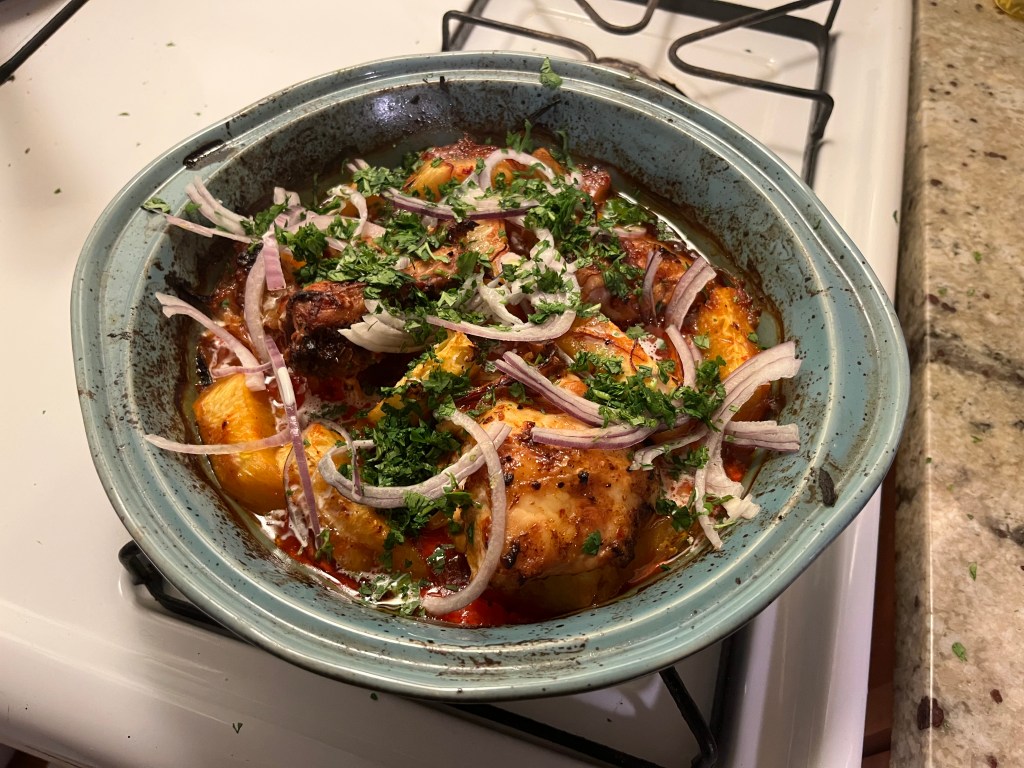
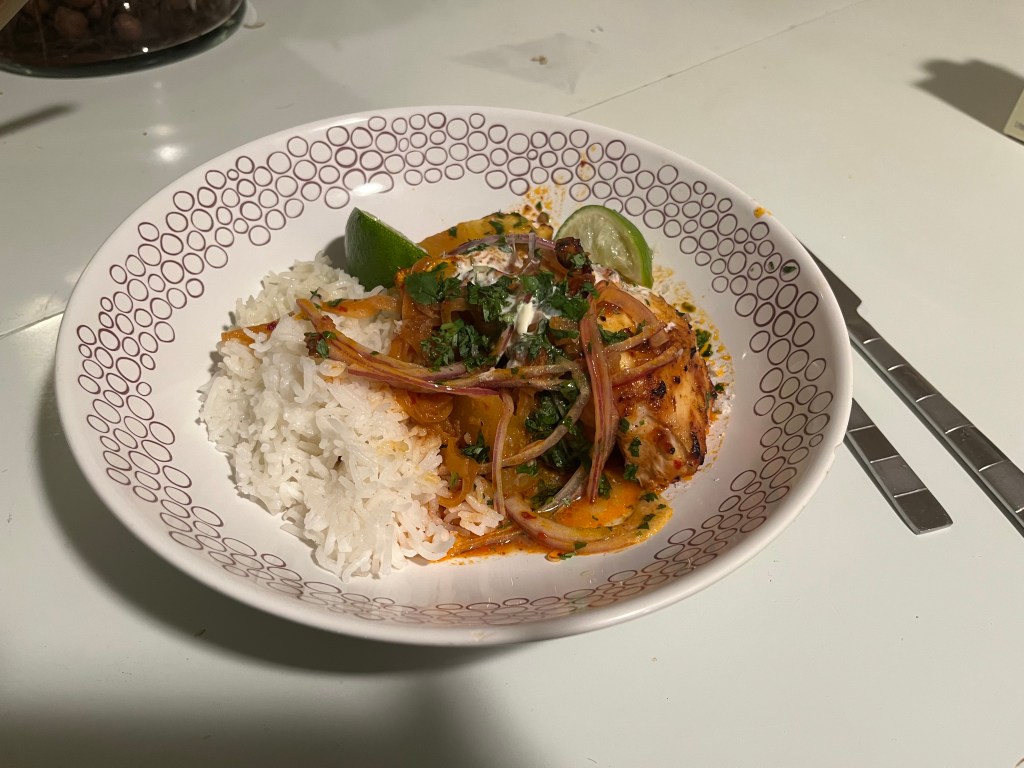
The use of pineapple and pork as a seasoning intrigued me. Coming off of stewed peas seasoned with chorizo, my expectations were pretty high. I got the ‘Nduja at a local Italian specialty store, Formaggio Kitchen, which I’d recommend if you live in the area. This dish was fine, but not up to the standard of the veg and fish dishes in Mezcla, which I think I’ll focus on for the next couple recipes.
Cooking & Tasting Notes: be sure to use a shallow pan (as opposed to a dutch oven), otherwise there is no way to crisp the skin. I tried broiling my dutch oven and forgot about it and the skin still did not crisp much, whereas the shallow Earthenware pan crisped according to the written instructions. I marinated the chicken in the ‘nduja-chipotle paste for about 4 hours so it could at least brine. The dish is significantly under-salted as written, I’d recommend doubling the salt in the paste and adjusting to taste part-way through the bake. The pineapple didn’t really blacken or caramelize at all. Next time, I would pull half of the pineapple and caramelize it, and the other half I could maybe even try pickling in lime juice and habanero? It is important that at least half of the pineapple be cooked in the juices with the chicken to lend their flavor, so some troubleshooting would be needed. Finally, I served this with rice, but I’d recommend experimenting with bread or another starch, as well as a green vegetable on the side.
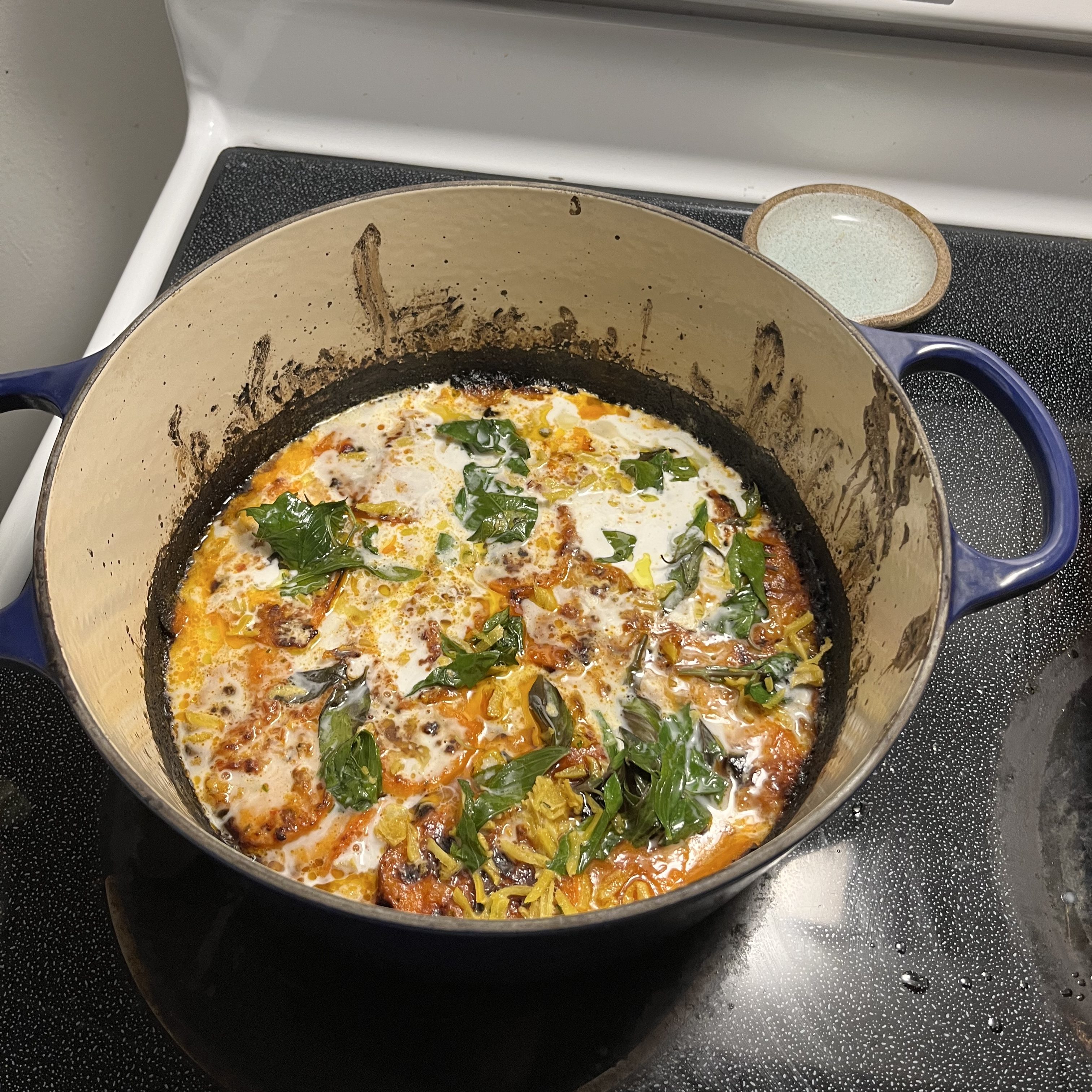
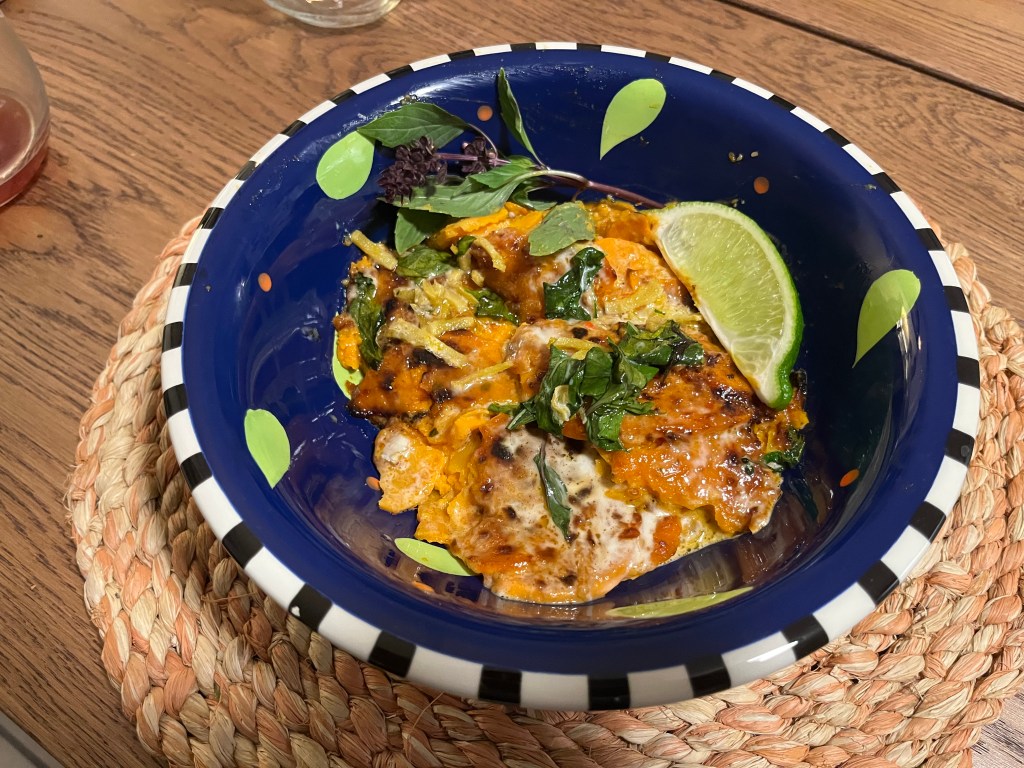
Mezcla also has a number of vegan / gluten-free options. This Thai-inspired dish looks like a particularly attractive example and is the first I’m cooking from the “Entertaining” (as opposed to “Everyday”) half of the book.
Cooking Notes: I accidentally added 50% extra coconut milk to the curry – this was OK since it would have gotten added during the bake anyway, although, I think it may have caused the texture of the potatoes to be softer. We made a double batch as we wanted to fully feed 4 hungry folks (including some vegans / gluten-intolerant folks). I put the gratin in two separate baking dishes to keep the surface area the same, I upped the temp by 10 degrees, and I baked for 10 minutes longer. The resulting gratin didn’t have as much bite as I’d like – try cooking a bit shorter; this may also have been due to the mistake of adding too much coconut milk early on. Be sure to substitute tamari for the soy sauce if you want gluten-free.
Tasting Notes: Yum – very good Thai curry flavor (the recipe description says this is close to a Panang curry). The sweet potatoes are a little soft and mushy in the middle, but theres enough texture at the top, sides, and from the fried aromatics to keep it a little interesting. Definitely do the aromatics! I noticed that everyone went up for seconds (I actually snuck some thirds!) Next time I would experiment with adding a portion of Thai ginger instead of regular ginger to the curry sauce. I’d also recommend adding a few hot chiles to the curry as it could have used a bit more heat. I paired this with Milan Nestarec’s Podfuck – a long skin-contact pinot gris from the Czech Republic that has a following in natural-wine circles. I opted not to do a riesling as the curry didn’t seem very spicy (good choice). This wine had plenty of acid, a bit of volatility (it kind of reminded me of some of the highly volatile Georgian wines I’ve had, but less intense), and medium-light tannins. Good pairing.
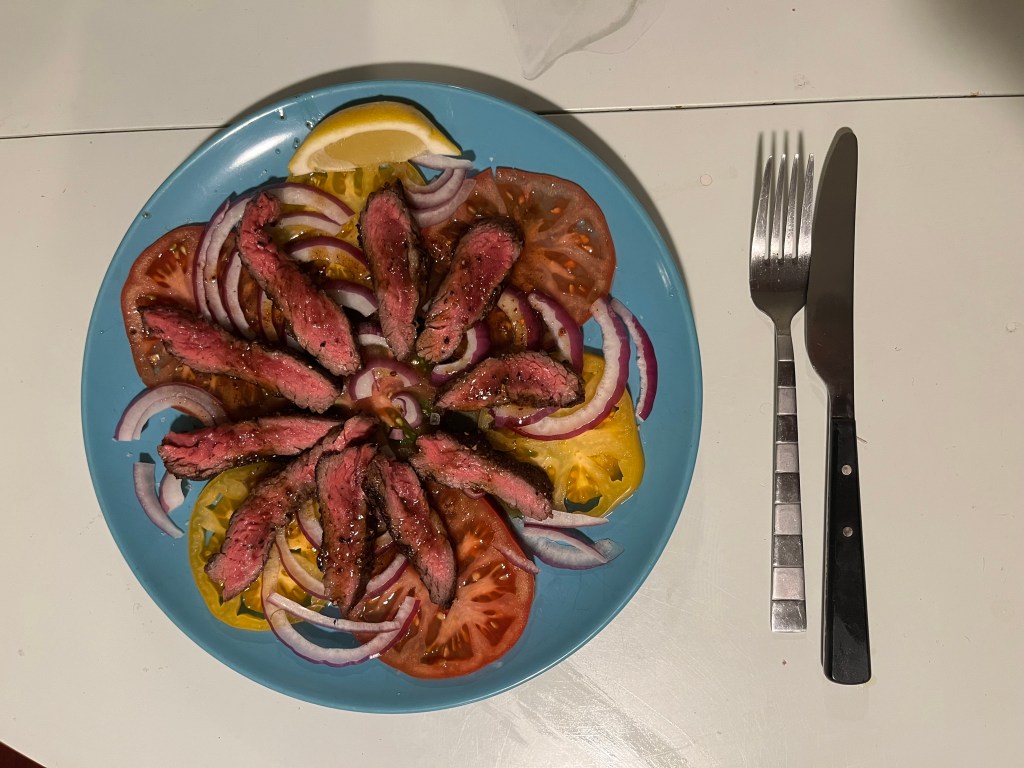
Time to try some meat from Mezcla! Whole Foods did not have skirt steak (which is a super-thin, fatty cut on the cow’s chest), so I looked up substitutions and saw on one website that sirloin tips would work. The sirloin tip is a cut from the round of the cow, not the sirloin (confusingly) – it is located adjacent to the top sirloin, a more tender cut that is actually in the sirloin. The sirloin tip is a good bit thicker than the skirt steak and requires longer cooking to reach temperature. It should also marinate 2-4x longer. Some websites suggest cooking these thin and chewy cuts (such as skirt and flank steaks) to a bit higher temperature to make them more tender. I hit rare for mine, but I wish I had shot for med-rare, erring on the side of medium.
Cooking notes: adding a minute to the 2-4-minute-per-side cook time for skirt steak was not enough. The range should have been more like 4-7 mins for sirloin tips. Use a thermometer when changing cuts like this. You can also ask the butcher to select the thinnest cuts as there is a lot of variation. Also: I recommend putting the cast iron in the oven on max and then putting it over the burner on high. Don’t worry about over-charring the steak. Also, don’t bother with using a blender to grind the dried Persian lime. I’ve always used my spice grinder (which is a 20$ cheap “chopping” coffee grinder that I am sure to never use coffee in, a highly recommended investment.) You can easily grind a single lime for a batch of this recipe.
Tasting notes: The steak was nice. I realize in retrospect I should have marinated this cut much longer than the suggested one hour for skirt steak. The highlight of the dish was the maple butter. Do yourself a favor and make at least 2x as much as you need. The steak came out a bit too rare for my liking and definitely too chewy – it made me a bit hesitant to serve it to my housemate. The charr was perfect.
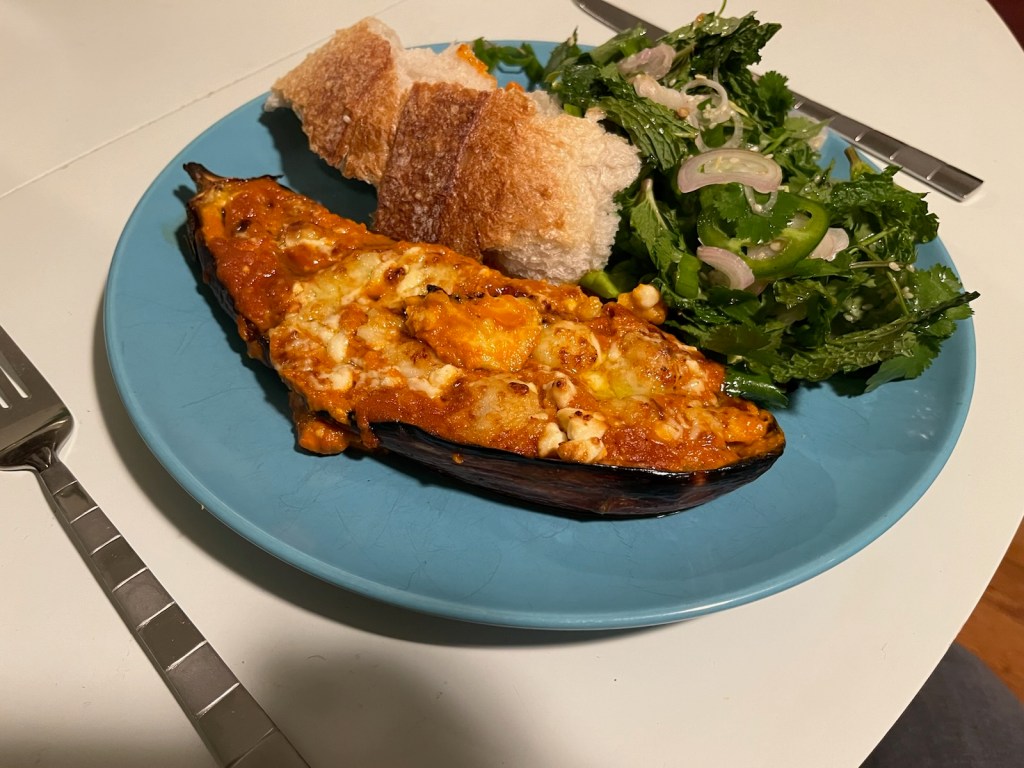
Fresh off of an amazing dinner of poached cod from Mezcla, I needed a quick-fix dinner as a break from work. I turned to the very first recipe and decided to make this eggplant dish. I also prepared a salad and some bread to go with by its suggestion. The recipe looks quick, but I didn’t realized I’d have to blend my own sauce.
Notes: Roast that eggplant hot and near the top of your oven (I’d do 500F next time) as it’s difficult to get it browned in the allotted time (before they deflate into eggplant-shaped pancakes!) You may notice that my sauce is more orange than in the cookbook’s picture. This is because I blended on high speed which creates a very fine emulsion (I like that!) If you want a red sauce though, just be careful to blend on low-ish speed. Finally, note that I actually forgot to include the cream in the cheese mixture – I poured it over about a minute after the cheese had been in the oven. This attempt at a fix was largely ineffective as the cheese remained in gobs.
Gem and Herb Salad with Maple, Lime, and Sesame Dressing I’m not the biggest salad fan, but I didn’t want to ignore Ixta’s suggestion to pair this dish with a salad. I chose the gem and herb salad because it looked easy (it is.) Not because it looked delicious or interesting (it’s not). Maybe go a bit heavier on the maple syrup in the dressing? With the pickled shallots, I was getting a lot of acid overall. I would also rip or cut up the lettuce leaves to make them smaller. I used mint and cilantro; wish I had gotten basil too.
Mezcla, a Mexican-Brazilian-Italian+ fusion cookbook by Ixta Belfrage, apparently hails from the extended Ottolenghi universe. After I received the book and flipped through the pages, I was initially skeptical about whether I would enjoy the book. Sadly, this may have been due to my bias against vegan and gluten-free cooking, which the author prioritizes in some recipes, as well as my fatigue of cooking from Plenty, Jerusalem, and the many other recent Ottolenghi books that I’ve been mostly ignoring in favor of other books that I find more exciting. Tired of rich and heavy meat dishes (from My America and Jerusalem), I decided to give a light-looking poached cod dish a go from Mezcla. And why not throw on an easy dessert (a crème brûlée)? In short, I misjudged this book. Both recipes delivered a show-stopping dinner.
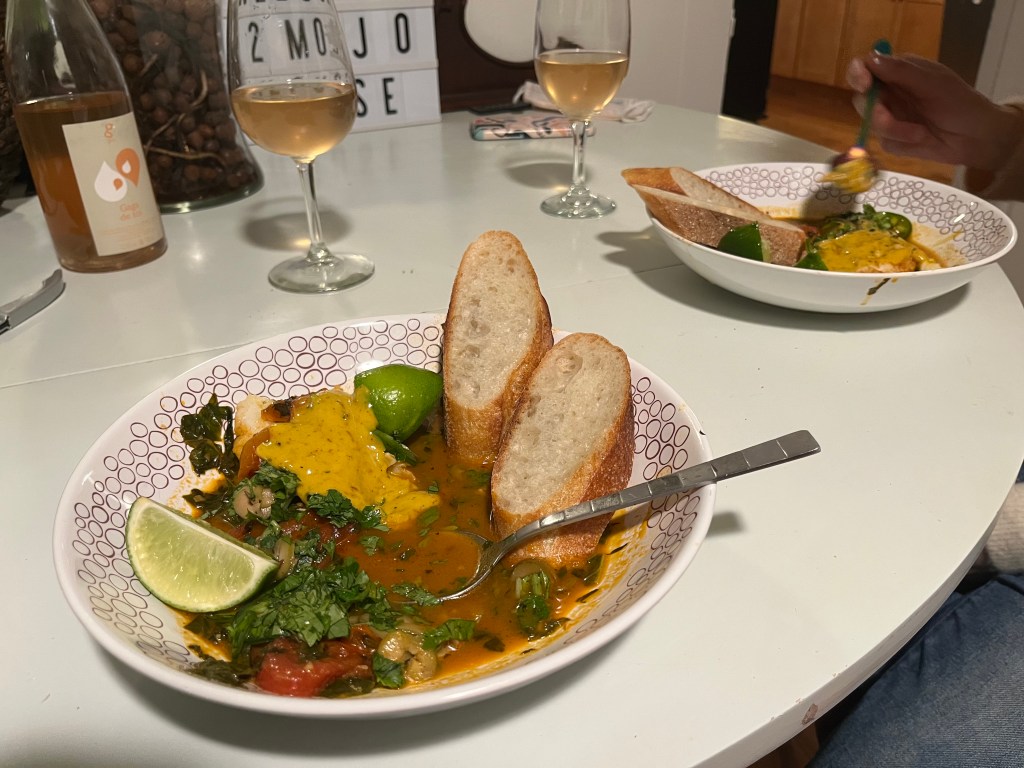
First off, the paprika-saffron aioli is *not* optional in the recipe. You have to make it! It’s too good to leave out. This particular aioli has a nearly 1:1 yolk-to-oil ratio, which is unlike any aioli I’ve ever made, but it’s rich and it works great. Besides this, I’d emphasize that you should be careful to include the lime, herbs, jalapeño, and olives at the end – all components add something unique and balanced to this dish. I paired the dish with a tart and fruity French gamay rosé with a couple years on it, which was yummy, but just an OK pairing. Given the prominence of the saffron, I’d consider going with a Rioja rosé instead. There’s enough acid in the broth that you don’t need it in the wine for balance.
The main dish of poached cod was outstanding. “This is fucking amazing” was uttered multiple times. I also added, “this is better than any flakey fish dish I can remember getting at a restaurant ever.” The saffron, jalapeño, olives, herbs, lime, and tomato are all strong and make an addicting broth that becomes sauce-like with the addition of the aioli. It is great to mop up with crusty bread and desired in every bite.
The dessert is straightforward if you’ve made custard before. Note that there’s a lot added to the custard, so it probably needs more like 6 hours to set up in the fridge, and you might want to throw them in the freezer for 20 minutes before you torch them so it doesn’t disturb the custard. I actually got enough for 5 small ramekins. Also, there’s a hidden chocolate layer on the bottom! It’s very very rich. This was a perfect winter show-stopping & easy dessert to pair with any main! Looking forward to cooking more from this book!
This meal has had me thinking about the value of cooking regional versus fusion foods. I feel like I learn and remember a lot more from mono-regional, traditional cookbooks; however, these two recipes reminded me that I probably enjoy eating good fusion cooking more. I also find the cooking from fusion cookbooks to be more approachable because I’m more likely to find a one-pot dish that stands as a meal and less-likely to need to make accompanying pickles, breads, chutney’s, etc. that may feature in a regional cuisines traditions, perhaps hailing from a time that family/household members focused more of their day on cooking. While I *love* learning all of this stuff, I do wonder if it sustainable to learn such types cooking? It’s too bad that this tradeoff (seemingly) exists. I suppose I will seek a balance between both types of cookbook in the future.



 Joe Cook Me