I’ve recently been experimenting with both collaborative dinner parties and collaborative dish imitation “workshops” rather than my usual solo cooking endeavors. I’ll get back to you about the latter in another post, but here I’m trying out my first collaborative 4-course dinner party! The menu was inspired by my friend Sophie’s desire to cook a red-wine risotto, which led us to design a four-course menu from Emelia-Romagna, where a rosemary red-wine risotto is traditionally served with game.

I turned to a new (for me) cookbook devoted exclusively to Emilia-Romagna: The Splendid Table by Lynne Rossetto Kasper, which was awarded Cookbook of the Year in 1992 by the James Beard Foundation. Despite the ugly cover, I can attest that this book is indeed splendid! It’s length comes from plenty of context and ideas associated with the 200 recipes, rather than trying to cram in as many as possible. Each recipe features subsections for the main parts of the preparation and assembly of the dish as well as “Working Ahead” on exactly how far in advance every component can be prepared (which reminds me of Falestin), wine pairings, and numerous menu-pairing suggestions. It was very easy to build a four-course meal around a single dish. Thank you! A variety of dishes are featured that are both homestyle and fancy as well as contemporary and historical; e.g. there is a whole chapter devoted to “The Sweet Pastas of the Renaissance!” Cookbook of the year seems appropriate!
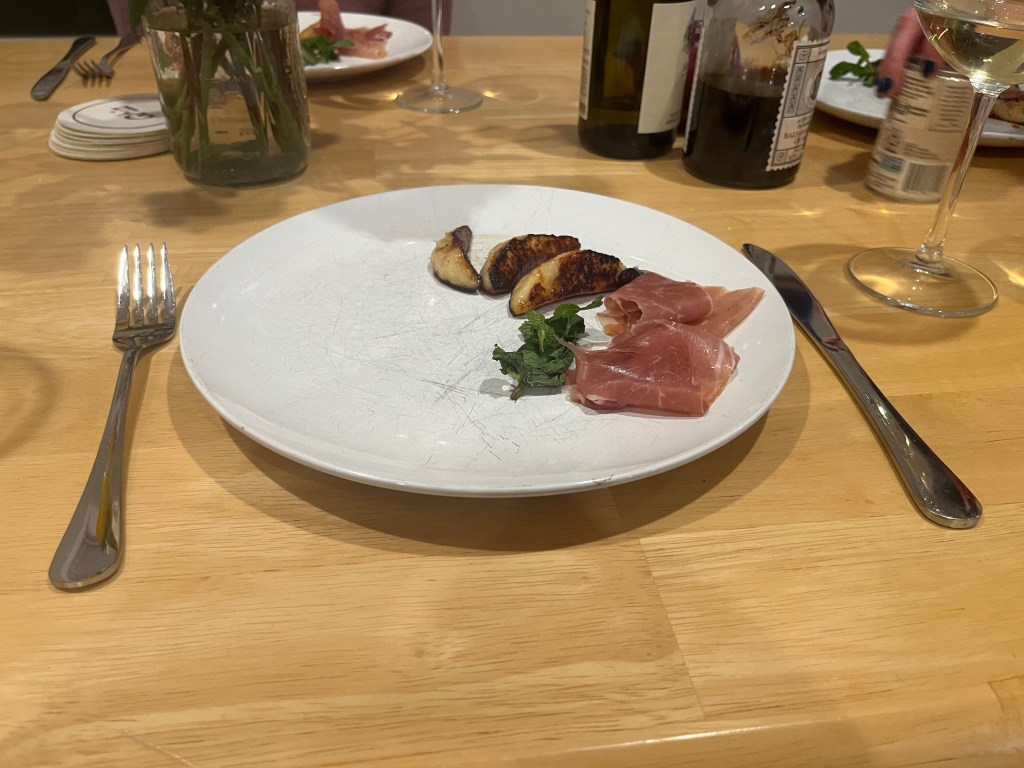
Antipasto: Hot Caramelized Pears with Prosciutto
I could not find ripe bosc pears, so I had to substitute a red-skinned variety. I would recommended getting your pan smoking hot as it took much longer than expected for me to brown the pears and they became excessively oily. Otherwise, this dish was nice. The mint is important I think. I’d recommend finding the best prosciutto from an Italian specialty market that you are able to.
Joe’s Rating: 6
Difficulty: 3
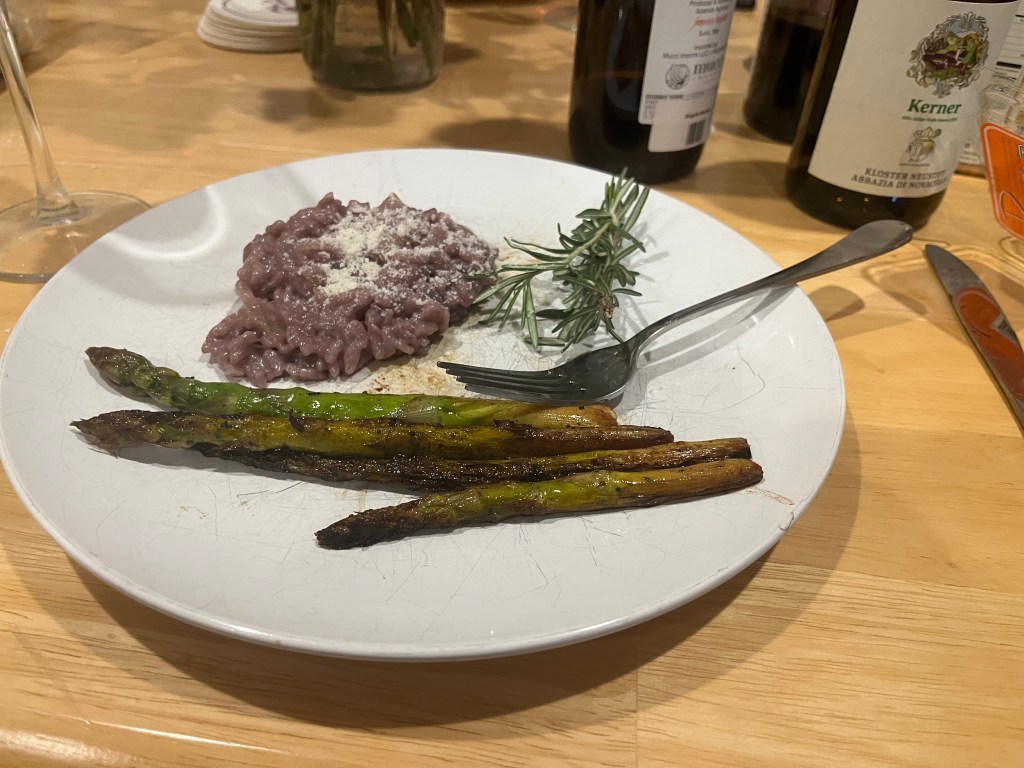
Primi: Risotto of Red Wine and Rosemary with Asparagus
We used a barbera to make this. Despite being very acidic, I still felt the dish could use a little more acidity (or keep around extra wine to drink alongside.) Otherwise, very good!
Joe’s Rating: 6
Difficulty: 4
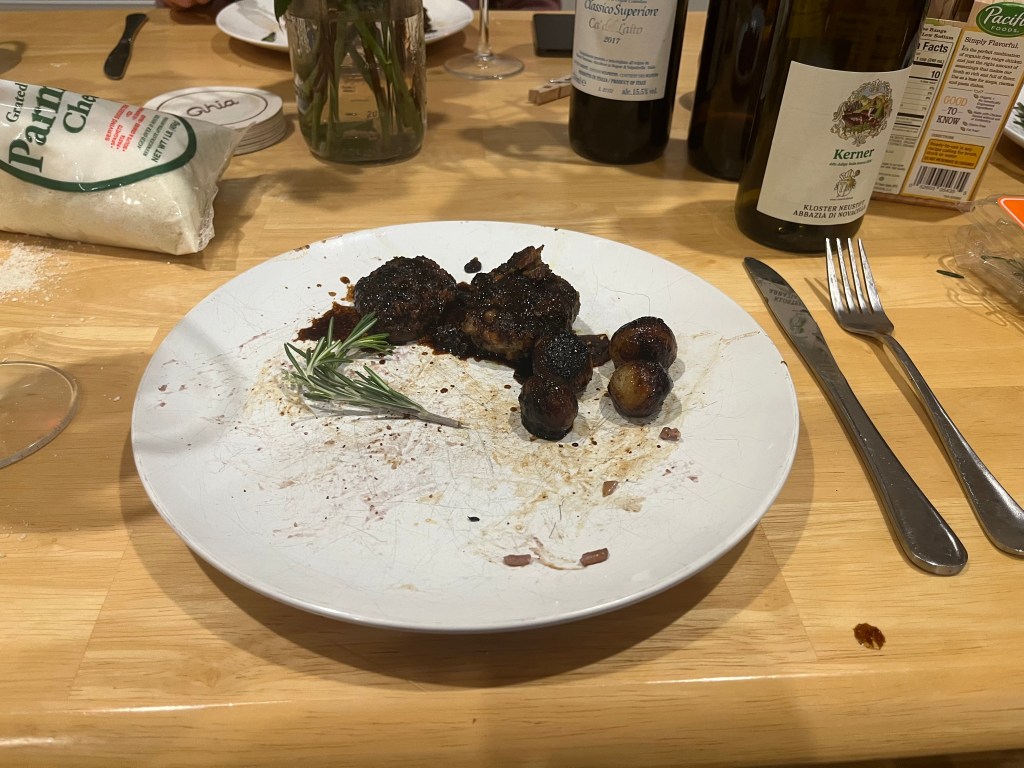
Secundi: Artusi’s Delight (Spiced Festive Meatball)
For the main, we couldn’t find any affordable game, so we opted for this historical meatball (as indicated by the spice and sweet elements in this savory dish.) The meatballs (or, more accurately, patties) were soft, subtly spiced, and flavorful.
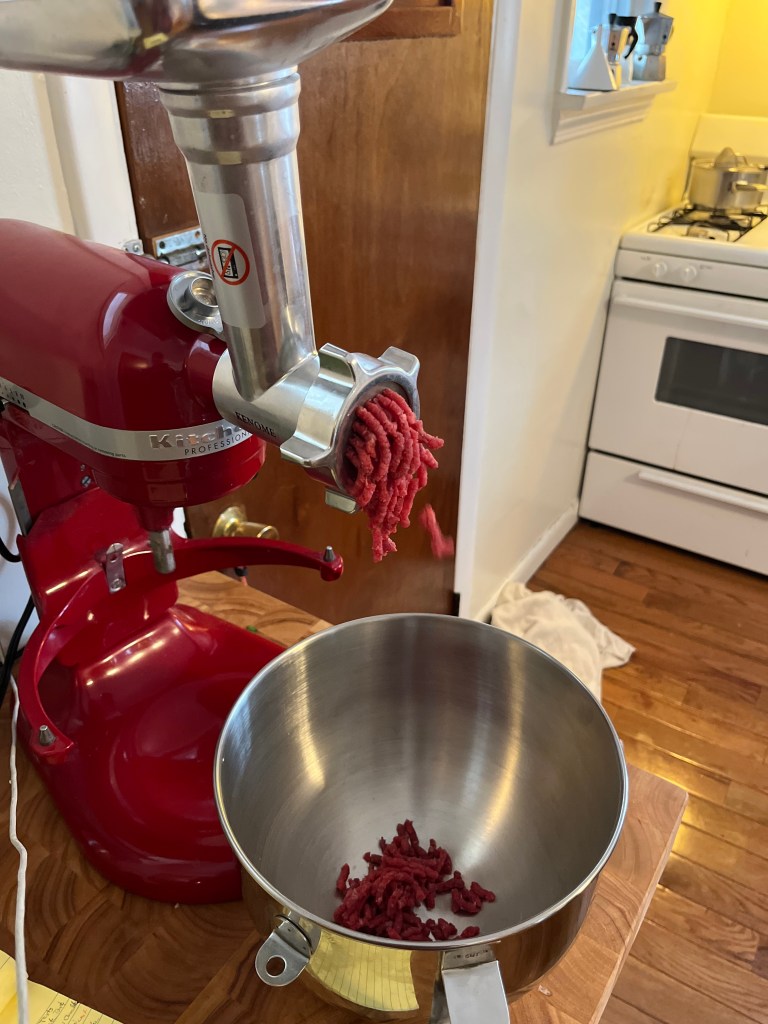
Notes: I decided to grind my own meats; to do this, I incorporated both the pancetta and the chicken thigh into a grind of sirloin-top rather than processing them. I figured this would create a better texture. Be careful not to char the patties; go low(ish) and slow. Could use a bit more salt (maybe at serving since this could change the texture of the patty.) It takes longer to reduce the stock than suggested. The sauce is excellent; try to get as much as you can out of it. Also, definitely make a double batch of the glazed onions!
Joe’s Rating: 6.5
Difficulty: 6.5
Dessert: Marie Louise’s Crescents
These cookie-like spinach-filled pastries stood out to us because they invert the more common veg-to-fruit progression of a meal. We were also intrigued as spinach is a particularly unusual ingredient for dessert. If you are curious, these were thought to come to Emilia-Romagna from Austria by way of a court cook.
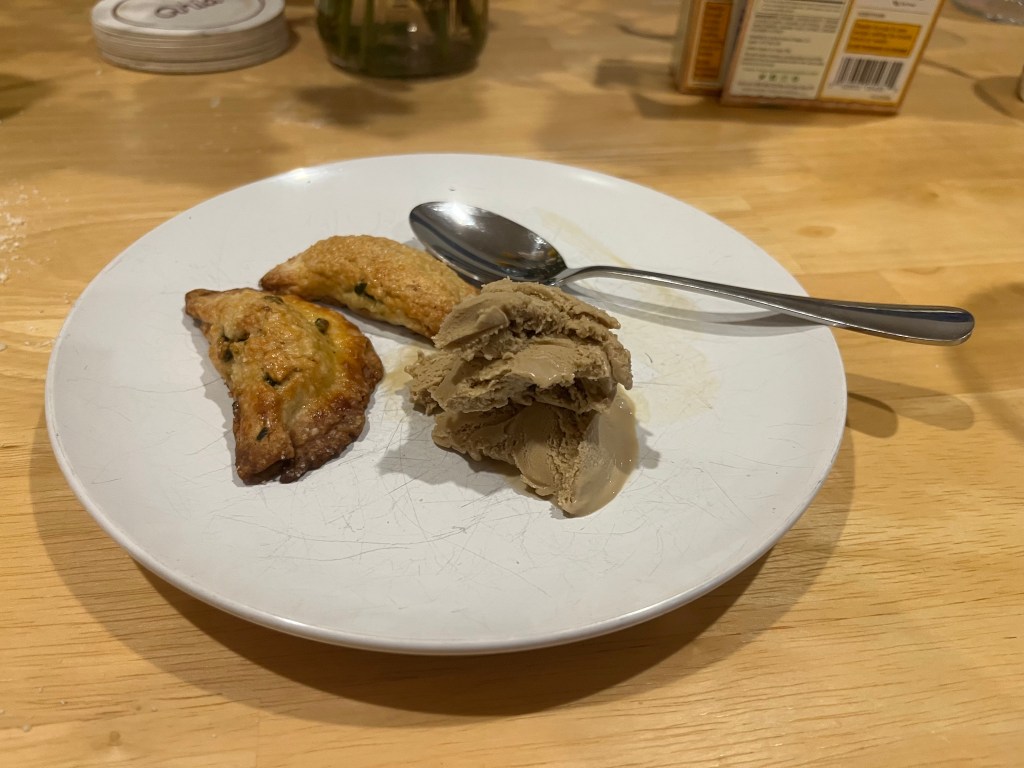
The dish was mysterious. Our guests spent a good couple minutes trying to guess what the “licorice”-like flavor was coming from. Note: there is nothing anise-flavored in the ingredients; that note comes entirely from the cooked spinach, toasted almonds, etc. When they found out it was spinach, all were surprised and entertained. The author recommends pairing this with coffee; since we did not have any at the house, we used coffee-flavored ice cream instead, which I’d highly recommend if you make these crescents. I also recommend using a vermouth in the pastry dough (I used Chambery blanc/sweet).
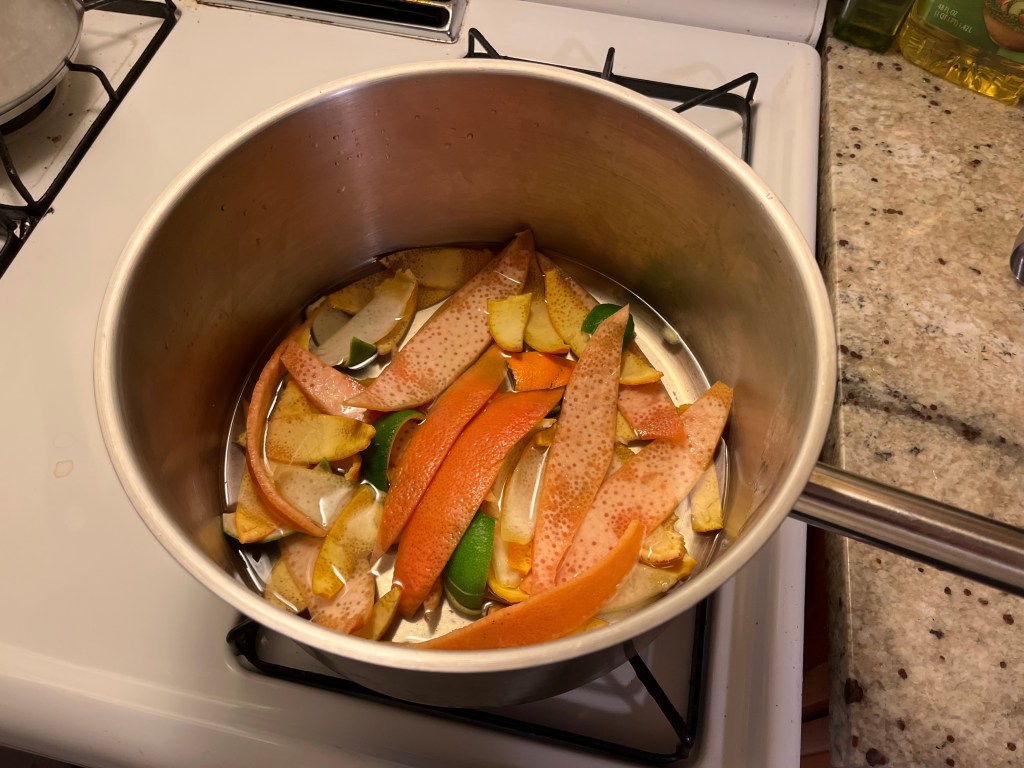
The recipe calls for candied citron (which is actually an entirely differently fruit than lemon). To substitute for this, I made an overnight version of homemade candied lemon, orange, and grapefruit peel loosely based on a recipe in the book “Southern Italian Desserts” by Rosetta Costantino. Be sure to cut the lemon peel fine as they may come out tough. The ripest fruit with the thickest rind seemed to work best.
Finally, note that the pastry dough is difficult to work with as it falls apart when strained; however, if you are careful to keep it under plastic and maybe spritz lightly with a water bottle, you can manage to get them together.
Joe’s Rating: 7
Difficulty: 7
 Joe Cook Me