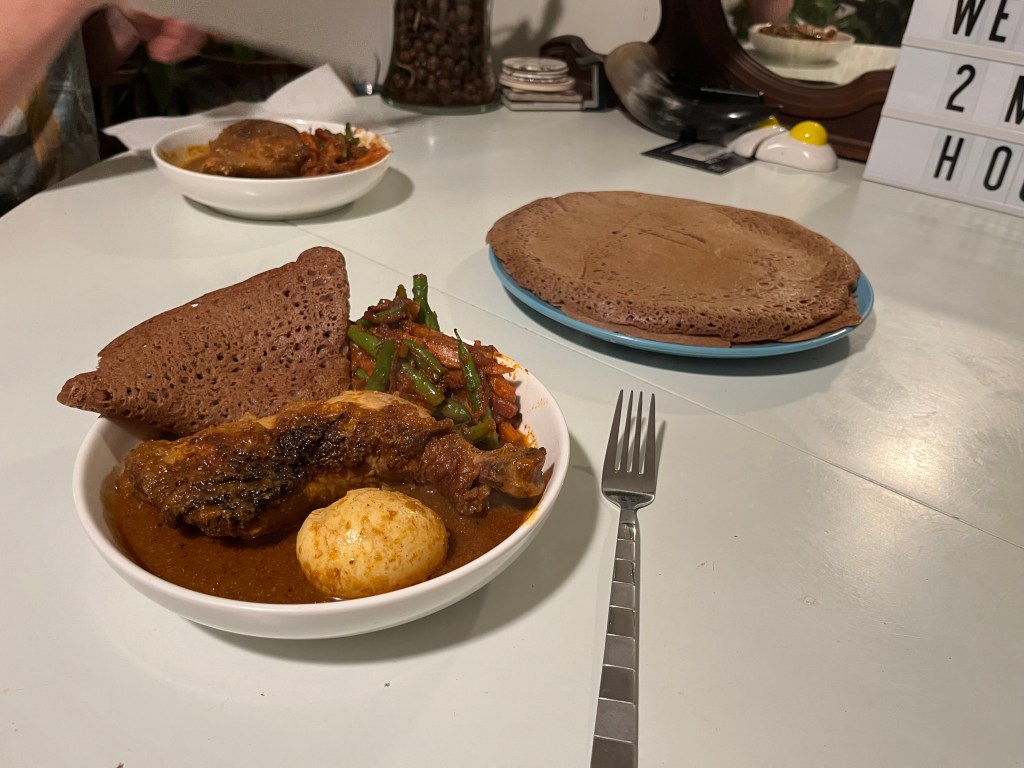
The combo of doro wat (spicy, smoky Ethiopian chicken stew) and fossolia (carrot and string beans in a sweet-spicy onion stir-fry) struck me as a good starting dish to make from Kwame Onwuachi’s new cookbook “My America.” An added complication was the need to serve the doro wat with Injera, a spongy micro-pocketed sour earthy flatbread made from a tiny grain called Teff. You may have had a version of this flatbread in Ethiopian-American restaurants, but it was probably made with mostly wheat and barley and has a spongier, less stretchy texture than the real McCoy. I figured I would try the 5-day fermentation with some teff flour I ordered online. I also had to order some dried koseret, an herb related to Mexican oregano. According to Wikipedia, it smells “camphorous and minty.” I also ordered some Maggi seasoning cubes.
My attempt at fermenting teff-flour into injera batter (based on a recipe from TheDaringGourmet.com) seemed to be working well by days 2-3, but by days 4-5, it was clear something was amiss:
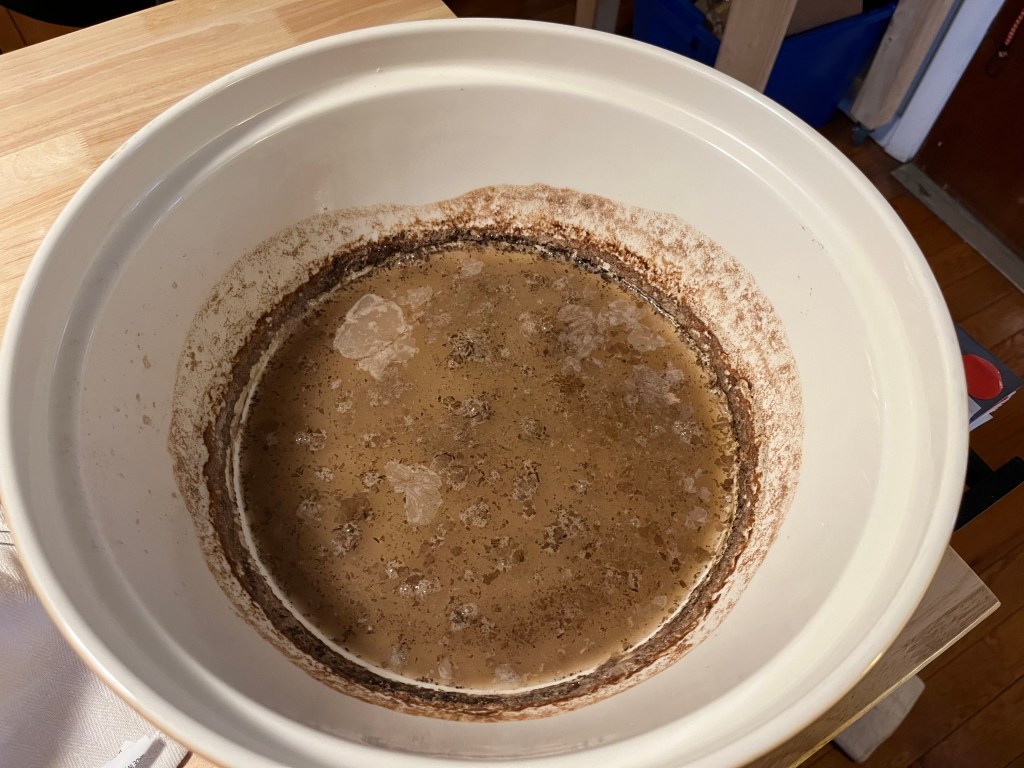
The white film on the surface would have been fine (likely a type of yeast), but the black spots (combined with a musty, sewage-y, unappetizing smell) indicated mold. I had to toss this batch of batter. Quickly, I looked up a fast-Injera recipe on Cookshideout.com, and threw it together an hour before dinner. I used 100% teff and it was fine – no need for the suggested wheat here. The resulting flatbreads were nice, but less sour and less pocketed than the injera I’ve had in restaurants and seen in pictures (maybe add a touch more vinegar than suggested). Next time I’d like to either ferment this is a cleaner environment or pitch a sour-dough starter (which I would borrow from a baker) and let it ferment for only 24-hours – I think I found this technique discussed in the comments online and as a former brewer, I think it makes sense that one could achieve the desired result much faster with a sour-culture starter like this. The fast recipe worked well enough though.

The doro wat featured a lovely, smokey-spicy Barbere seasoning, used to dry rub the chicken overnight and near serving:
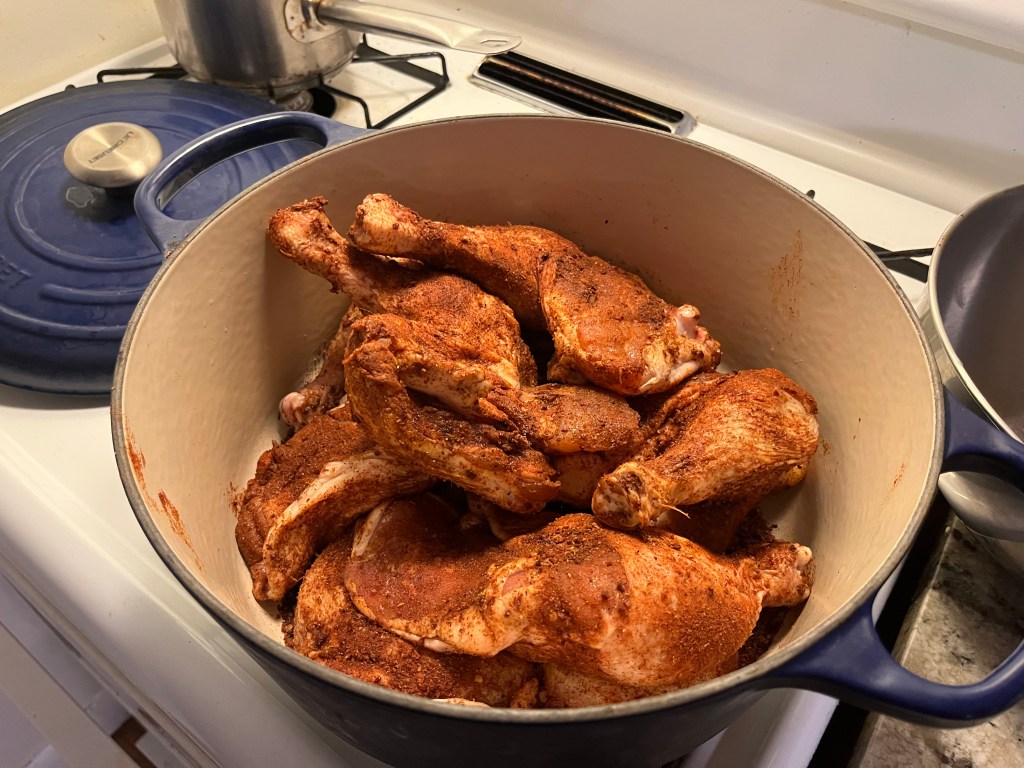
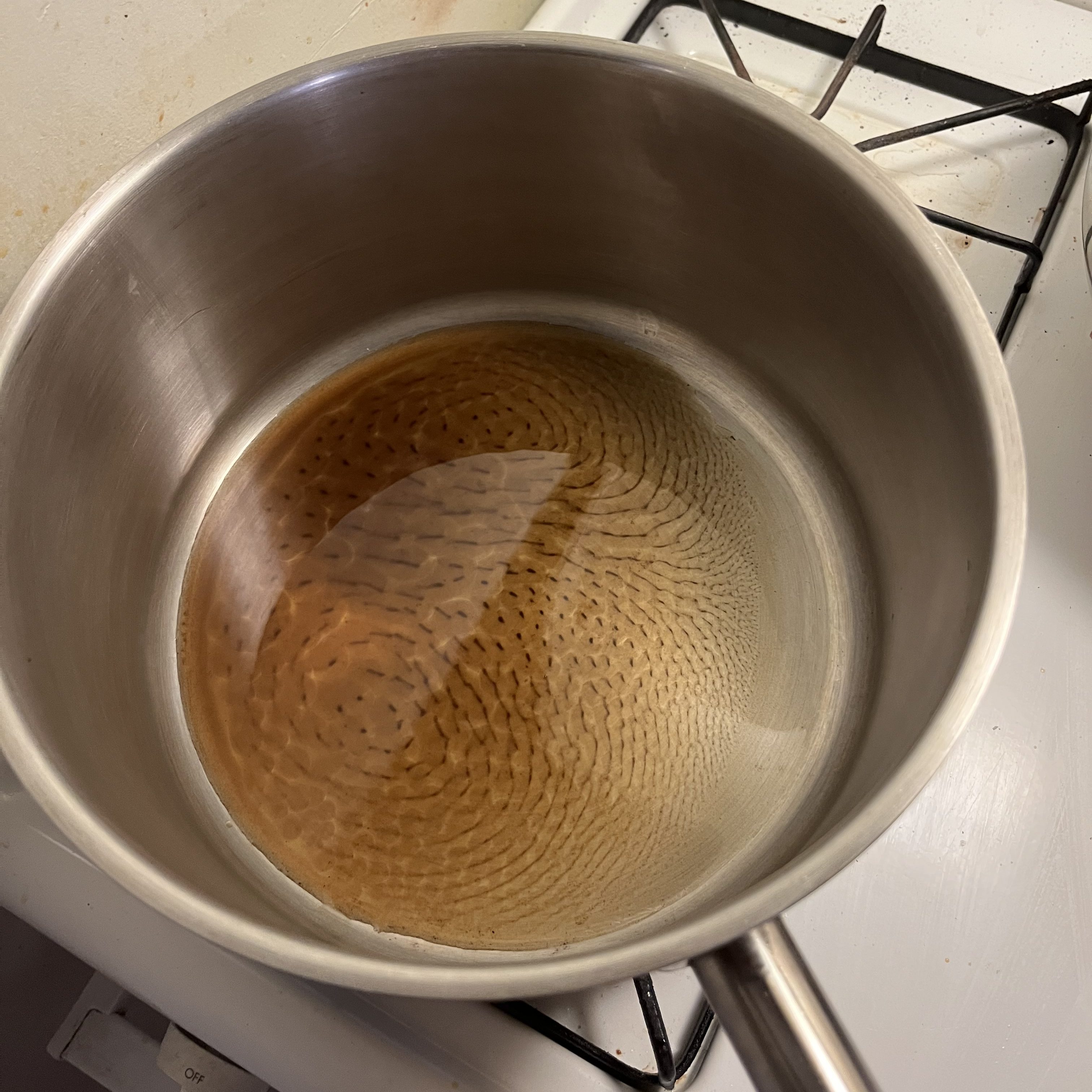
The spices in this blend are smokey and bold and make the dish. An addition of pure ground black cardamom also happens later in the preparation! As part of the stew, you will have to make niter kibbeh, a spice- and herb-infused oil. Traditionally, niter kibbeh is made by clarifying butter, but Kwame thankfully uses grape-seed oil here, so my lactose-intollerant friends can enjoy without modification. Note though, the niter kibbeh oil must be simmered over very low heat so as not to burn the spices. To give you an idea, in clarifying the butter of a traditional recipe, the milk solids should not darken much, so don’t darken your spices! My niter kibbeh oil was definitely burnt and I wonder how much more fragrant the dish would be if I hadn’t made that mistake. Something to work on for next time.
Also, as a fluid dynamicist, I have to take this opportunity to share with you these lovely convection cells that were made visible as I heated by niter kibbeh oil. The little black dots are some of the burnt ground spices, and they each indicate a point of convergence at the bottom of the oil, above which the oil is rising. If this were the atmosphere, vultures would be circling a draft above the dots and avoiding downwelling between them.
Similar to groundnut stew (from this book, see below), a single recipe makes a huge amount of food (about a gallon by volume). I originally thought that this meant there were more servings of food than the listed 4; however, I calculated that the double batch of stew, the fossolia, and the injera only added to about 8000 calories. If my calculation is accurate, the recipe correctly lists about 4 meals worth of food (unlike the groundnut stew.)
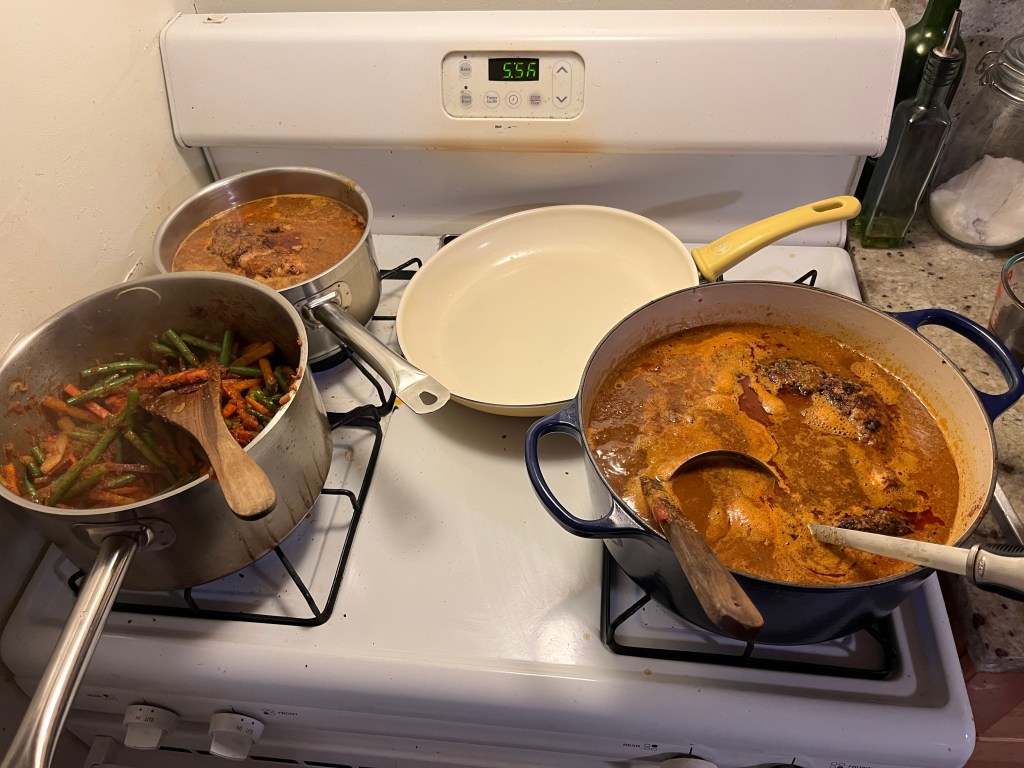
The resulting dish was rich, moderately spicy, smokey, salty. I think the injera, despite not being fermented, was a highlight. It was pleasantly stretchy and had a nice fresh yeast and slightly sweet and nutty grain flavor. It went really well with the stew. The fossolia was fine, nothing particularly special in terms of either the pairing or as a standalone dish. The meal was one of the messier ones I’ve prepared. It was difficult to figure out how to pull off pieces of chicken, break up the egg, rip apart the Injera, and get them all into a bite without getting wrist-deep in the dish. It makes sense that this dish is meant to be eaten by hand.
Joe’s Rating: 6/7/7 (Fossolia, Injera, Doro Wat)
Difficulty: 5/4.5/6.5
 Joe Cook Me